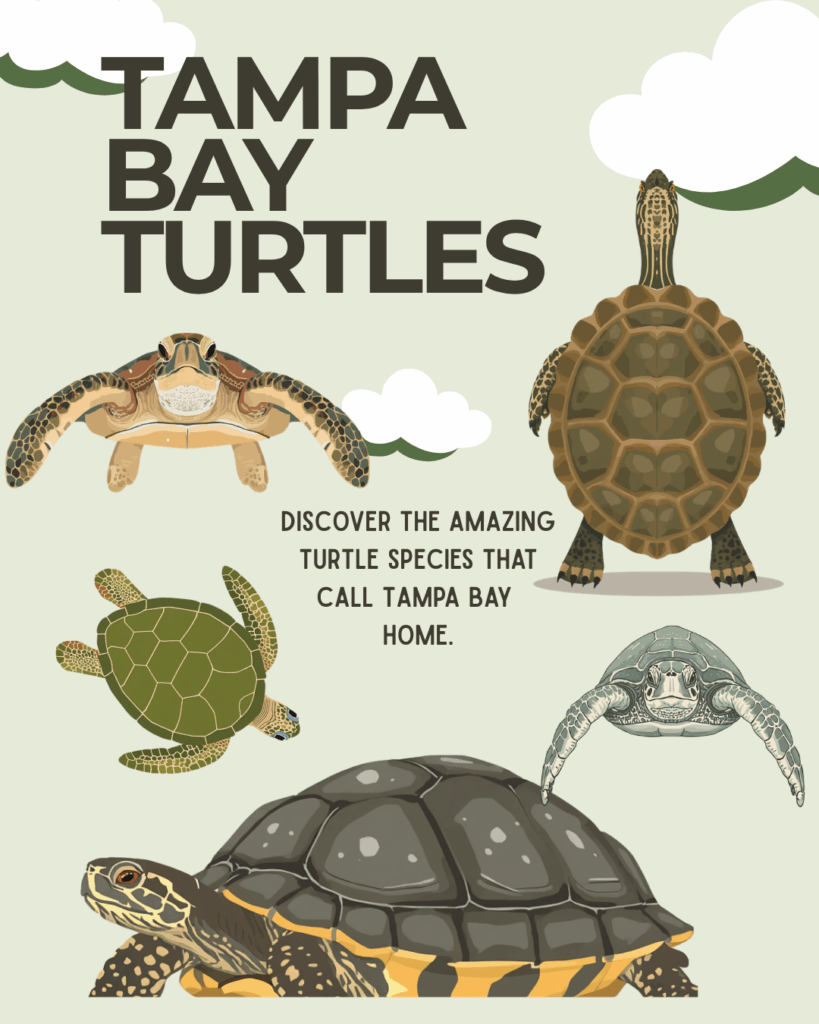
We just celebrated World Turtle Day (May 13) and World Sea Turtle Day (June 16th) is coming up, so here is Sea Us Rise’s primer on Tampa Bay’s beloved turtles. We have a wide variety of turtles in our area. Turtle nesting season started at the beginning of May, and goes through the end of October on the Gulf Coast in Florida. A reminder to be careful and observant while you are at the beach – or on shorelines. Turtle egg nests are often, but not always, marked off on the beaches. Boat strikes are the leading cause of death for turtles. Please keep that in mind when you are approaching the shoreline.
The Clearwater Aquarium hosts a sea turtle tracker on their website, right now following Kirby, a rehabilitated Loggerhead turtle. It’s fascinating to see how far Kirby goes.
What types of turtles are there?
There are four turtle categories: sea turtles, freshwater turtles, terrapins, and tortoises. Tortoises live on dry land, and the rest are water lovers.
Tortoises
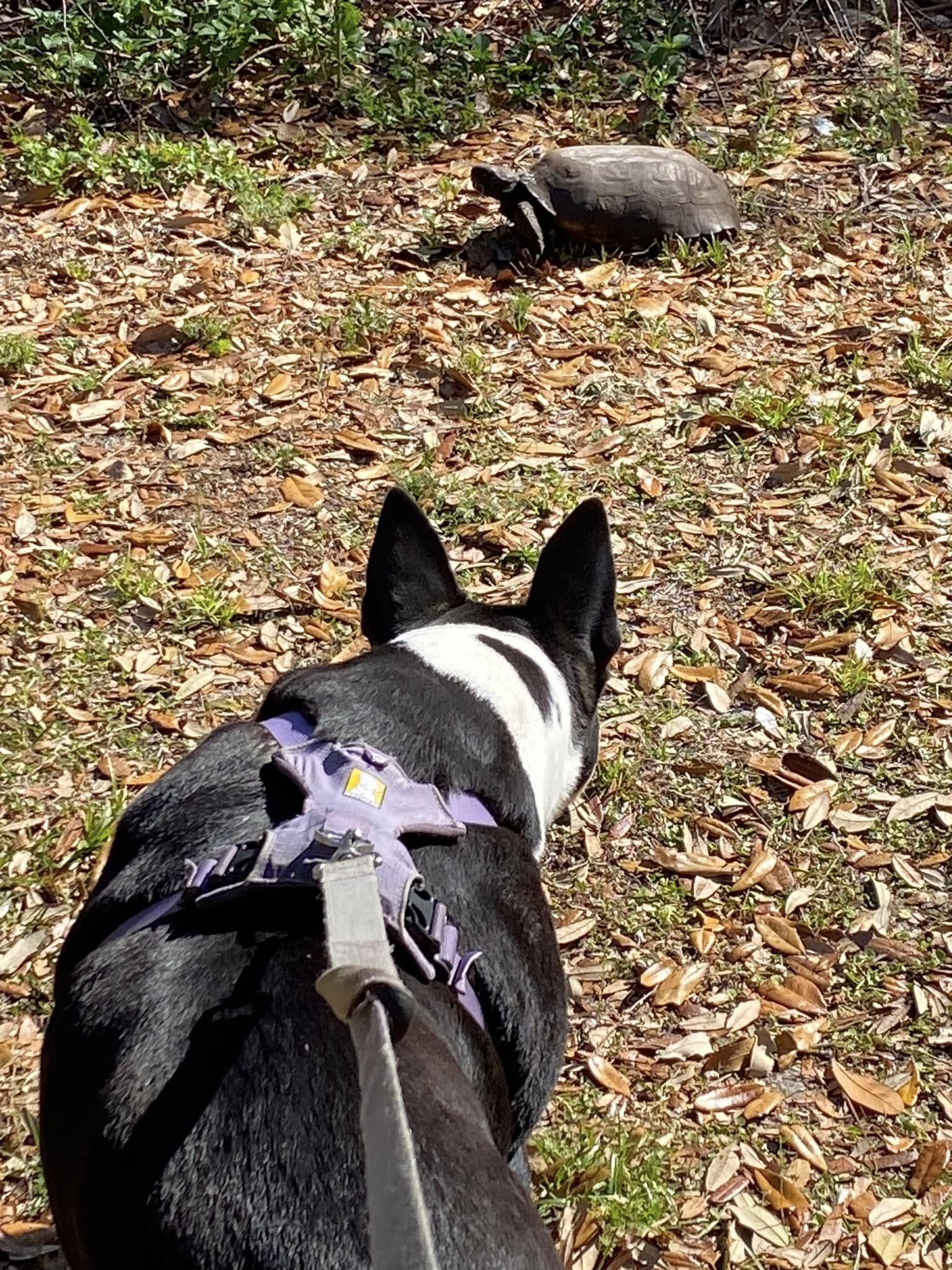
Gopher tortoises (Gopherus polyphemus) are Florida’s only native tortoises, and are a protected by law. Sometimes spotted at Boyd Hill Nature Preserve and Sawgrass Lake Park, gopher tortoises dig long and deep burrows. They like uplands, which basically means they live above the waterline, in forests, fields, pastures, and maybe some backyards. Gopher tortoises are a threatened species, and people must get a permit to move them before any development or construction begins.
The Florida Fish and Wildlife Commission also designates gopher tortoises as a keystone species. Their burrows are fundamental to helping all sorts of wildlife – more than 350 different species – find shelter. Gopher tortoises are opportunistic vegetarians, meaning they’ll eat almost any plants, but like grasses and legumes. Female gopher tortoises will also eat insects, feces, and other protein before nesting. Gopher tortoise nesting time is April through November, and the eggs incubate for about 90 days.
They generally live about 40 years. Male tortoises are full grown between 9-15 years, and females usually mature a little later, between ages 10-21. The maturity level and size depends on their local resources. Human development has destroyed much of gopher tortoises’ natural habitat.
Gopher tortoises are interesting in many ways. They might seem like introverts, but they are surprisingly social, living in turtle colonies, and sometimes hanging out outside of mating season.
If you ever find a gopher tortoise in a place that maybe isn’t safe, here is helpful information about what to do. If you see one crossing a road, you would be a hero to stop and gently carry it in the direction it was headed. Don’t EVER take it away somewhere else, and please don’t EVER paint a turtle’s shell. If you find an injured turtle, put a towel in the bottom of a tall box (compared to the turtle’s size. Call a local wildlife rehabilitation or exotic animal veterinarian and get it to them. Turtles are very resilient, and you could save its life.
Sea Turtles
There are five types of sea turtles living in Florida’s coastal waters, and three of them are common to the Tampa Bay area. Kemp’s Ridley, Green, and Loggerhead turtles can be found off shore. The other two types, Leatherback and Hawksbill, are swimming around further south of here, and on the Atlantic coast, though they might show up in our waters.
Kemp’s Ridley turtles (Lepidochelys kempii) are very rare, and very endangered. They are the smallest turtles in the world. They are most commonly found in the Gulf of Mexico. Kemp Ridleys can be identified by their nearly round shell and yellow underside.
Green turtles (Chelonia mydas) munch on sea grass and algae, and can be found along shorelines. They are the most common turtles found in our area. They’re called green because of their green fatty tissue, tinted from their diet. Green turtle populations have rebounded in North America, thanks to conservation practices, but remain endangered elsewhere.
Loggerhead turtles (Caretta caretta) are the ones primarily nesting on our beaches and coastlines. We have one of the largest nesting areas in the world. Loggerhead turtles can travel thousands of miles across oceans between nesting sites. Their huge heads and jaws help them as carnivores. Loggerhead turtles can weigh up to 400 pounds.
Freshwater Turtles
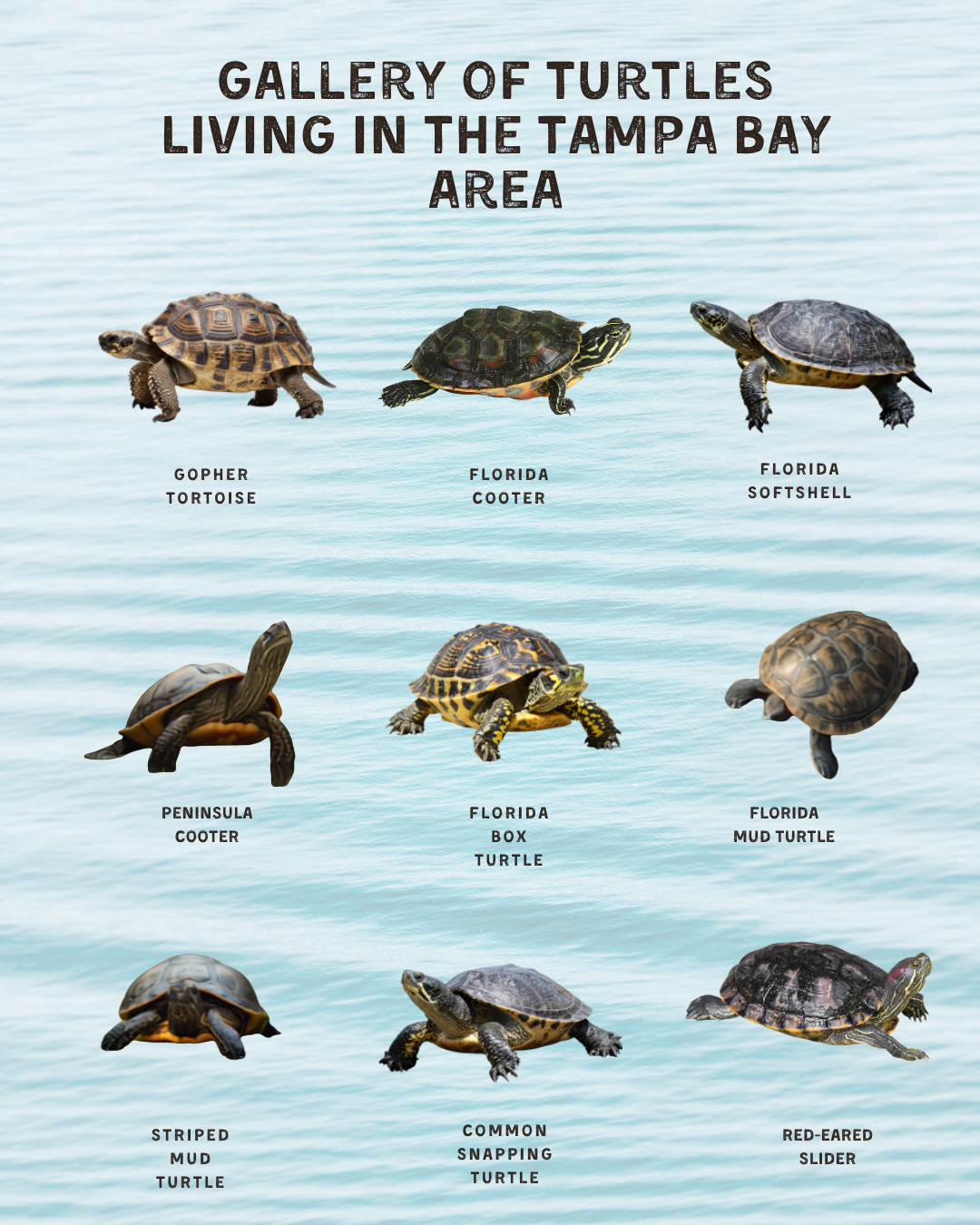
The Tampa Bay area has a slew of freshwater turtles: Florida Box, Florida Cooter (and Peninsula Cooter), Florida Mud, Florida (Common) Snapper, Florida Softshell, Red-eared Slider, and Striped Mud turtles.
Florida Box (Terrapene carolina bauri) The prettiest terrapin! Florida Box turtles can live for decades – even for a century. It likes damp environments, but doesn’t really swim. Typical area resident. It can close itself off completely for protection.
Florida Cooter (Pseudemys floridana) This is the turtle you see basking on logs. It’s one of the bigger freshwater turtles, measuring up to a foot across. The Peninsula Cooter (Pseudemys peninsularis), it’s close cousin, is also a herbivore, with distinct yellow stripes on its head.
Florida Mud (Kinosternon subrubrum steindachneri) and Striped Mud (Kinosternon baurii) turtles are similar. The Mud turtle is common, but shy. Might be spotted by muddy waters. Florida Mud juveniles have raised ridges on their shells. These are both little turtles, with adults’ shells measuring 3-4″ . The Striped Mud turtle has three yellow lines running the length of their shell.
Florida (Common) Snapper (Chelydra serpentina) is the largest freshwater turtle, growing up to 25-30 pounds. They will avoid you in the water, but can be more aggressive (self protecting) on land. If you see them in the road, unlike with gopher tortoises, do NOT try to move them. They are a protected species.
Florida Softshell (Apalone ferox) is the snorkeler of local turtles. It has a flattened appearance, with a long snakey neck. It is the largest of North American softshell turtles. Can be found in rivers, lakes, and ponds. Florida Softshell turtles can be aggressive if it feels threatened.
Red-eared Slider (Trachemys scripta elegans) are common because people released their household pets into the wild. Not native to Florida at all. Omnivores recognized by red stripes extending behind their eyes. Red-eared sliders can hibernate underwater.