Publix often stands as a Florida icon. Biggest grocery store in Florida. Most valuable brand in Florida. Usually top or second spot for customer approval. Their website states:
As part of its commitment to environmental stewardship, Publix continues to build on year‑round sustainability initiatives that bring associates, customers and communities together to care for the planet.
Why focus on Publix?
Publix gives customers an estimated 1,700,000,000 plastic bags each year. Yes, that is 1.7 billion plastic bags, or an average of 4,657,534 each day. The company claims that they have prevented 11.9 billion plastic and paper bags being used since 2007. This has been accomplished through better training of employees and increased use of reusable bags. Thank goodness they stepped up. Otherwise they would have given out more than 44 billion bags.
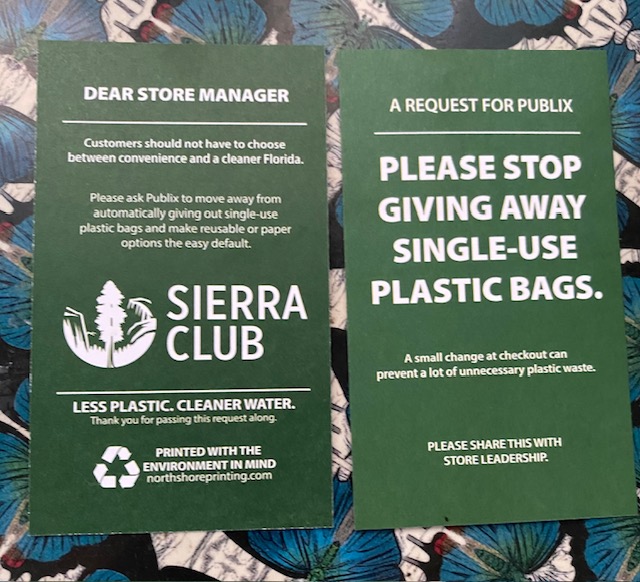
The Sierra Club has started a campaign asking Publix to stop distributing plastic bags. Why specifically Publix, and not all grocery retailiers?
Why are we targeting Publix? It is the largest supermarket in Florida and is a leader and model to other grocers and retail operations. Through its work with the Florida Retail Federation, Publix has supported laws that prevent local communities from enacting plastic bans.
Despite its many environmental committments – supporting some environmental nonprofits, making benches out of the reycled bags collected in their bins, Publix does not publicly recognize the deep damage plastic bags cause to the planet. The company’s extremely generous support to the Florida Retail Federation helped ensure that the Florida legislature overruled any local ordinances against single use plastic bans. Not only is this bad for the environment, it is bad for democratic representation.
Why are plastic bags so bad for Florida’s environment?
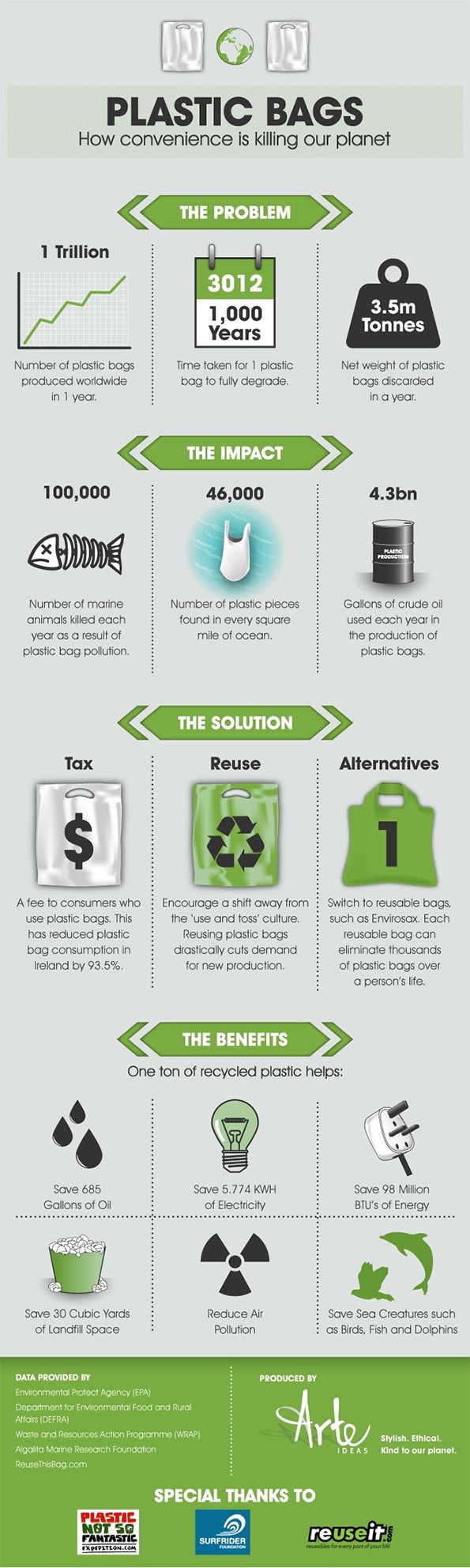
Plastic bags shatter into microplastics, getting into the water we drink, the dirt that grows our food, the air we breathe, and the same for all the living creatures on the planet. They harm things (vehicles, animals, machinery) when they tangle them. They are made from fossil fuels which also harm the planet, and that drives up the cost of fossil fuels.
All for the convenience of not using a paper or reusable bag for a few minutes.
It isn’t that hard to eschew plastic bags. Many major grocery retaliers do: Aldi, Costco, Sprouts, Trader Joe’s, and Whole Foods don’t have plastic. Tote bags are easy to find. Paper bags are less harmful for the environment.
It’s estimated that Americans use 100 billion plastic bags each year, using about 2.2 billion pounds of crude oil, or about 12 million barrels of oil. Imagine not having that oil go to plastic bags. That would have a positive impact on the economy.